Call Us for Support
+91 9654860915
Google Reviews
4.8
Call Us for Support
+91 9654860915

Sourced directly from the authorized manufacturer network to ensure authenticity and quality.
You can also access detailed information by clicking Login in the website header.
Supplied with complete CDSCO-approved import and customs documentation, including Form 12A & 12B, CDEC, GST Bill of Entry, Commercial Invoice, and Packing List.
Manufacturer / Innovator:
Germany
Regulatory Approval:

Your Trustedworthy Partner For Named Patient Program

Over a decade of trusted expertise in Named Patient Access to innovative and life-saving medicines.

100% CDSCO-compliant processes ensuring safe, ethical, and responsible medicine access.

Medicines sourced from authorized manufacturers with full batch traceability.

EU-GDP compliant warehousing for secure, quality-controlled global distribution.

Temperature-controlled logistics ensuring safe, reliable, and timely medicine delivery.
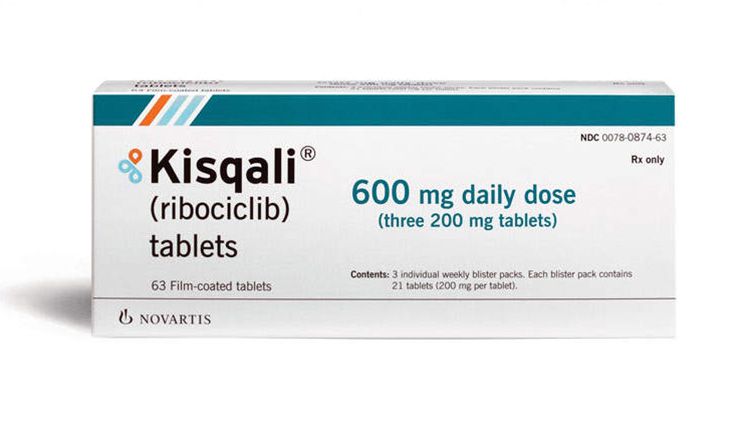
Kisqali (ribociclib) is an oral CDK4/6 inhibitor used in combination with endocrine therapy to treat hormone receptor-positive, HER2-negative breast cancer, across both early-stage adjuvant and advanced/metastatic settings.
Kisqali, combined with an aromatase inhibitor, is FDA-approved for the adjuvant treatment of HR-positive, HER2-negative stage II and III early breast cancer at high risk of recurrence. It is also approved for adults with HR-positive, HER2-negative advanced or metastatic breast cancer, combined with an aromatase inhibitor as initial therapy, or with fulvestrant as initial therapy or after disease progression on endocrine therapy.
Ribociclib inhibits CDK4 and CDK6, proteins that drive cell cycle progression in HR-positive breast cancer cells, halting their proliferation when combined with hormone-blocking therapy.
For adjuvant early breast cancer, the standard dose is 400 mg orally once daily for 21 consecutive days followed by 7 days off, in 28-day cycles, for 3 years. For advanced/metastatic disease, dosing is typically 600 mg orally once daily on the same 21-days-on/7-days-off schedule, as determined by the treating oncologist.
Kisqali requires monitoring for several important safety considerations.
Kisqali can prolong the QT interval in a dose-dependent manner. Obtain ECG and correct electrolyte abnormalities before starting and during treatment; Kisqali should be permanently discontinued for significant QT prolongation associated with serious arrhythmia symptoms.
Severe, life-threatening, or fatal ILD/pneumonitis can occur, a known risk across CDK4/6 inhibitors. Monitor for new or worsening respiratory symptoms.
Monitor liver function tests before starting and periodically during treatment.
Monitor complete blood counts regularly, especially during the first cycles.
Kisqali can cause fetal harm. Effective contraception is required during treatment and for a defined period after the final dose.
Step 1 – Search & request your medicine: The patient or treating doctor submits a request with basic details to initiate the access process.
Step 2 – Verification & eligibility review: The team verifies availability and reviews eligibility against regulatory and clinical requirements to ensure a compliant pathway.
Step 3 – Receive quote & delivery timeline: A transparent quotation is shared, covering medicine cost, logistics, and a clear delivery timeline.
Step 4 – Regulatory approval process: Assistance is provided to secure the approvals and documentation required for legal cross-border access.
Step 5 – Temperature-controlled import & handling: The medicine is sourced and transported under strict GDP-compliant, cold-chain conditions to maintain product integrity.
Step 6 – Secure delivery: The medicine is delivered to the patient or treating hospital, with updates provided at each stage.
Note: From request to delivery, every step is designed to ensure your treatment reaches you safely, compliantly, and without unnecessary delays.
Kisqali (ribociclib) is manufactured by Novartis and is approved across both early-stage adjuvant and advanced/metastatic HR-positive, HER2-negative breast cancer.
Import of Kisqali through a Named Patient Program requires a valid prescription from the treating oncologist, confirmation of hormone receptor/HER2 status, and supporting clinical documentation as required by Indian regulatory authorities.
NPP sources Kisqali directly from Novartis's authorized supply chain to ensure product authenticity and regulatory compliance.
Kisqali is sourced through verified, GDP-compliant, cold-chain channels from Novartis's authorized supply chain to ensure authenticity and quality.
Kisqali tablets should be stored at 20°C to 25°C (68°F to 77°F), with excursions permitted between 15°C and 30°C (59°F to 86°F), in the original blister package to protect from moisture.
Once sourced, Kisqali is packed and transported under continuous cold-chain conditions to preserve product integrity throughout the import process, with tracking and updates provided at each stage of delivery to the patient or treating hospital in India.
Patients across India can access Kisqali through NPP's regulated import pathway, with oncology specialists in major cities supporting the treatment process.
Leading oncology centers in Mumbai support breast cancer diagnosis and treatment coordination for Kisqali access.
Delhi's major cancer hospitals assist patients with biomarker testing and prescription support for Kisqali.
Bangalore's oncology network offers access to hormone receptor testing and treatment planning for eligible patients.
Chennai-based specialists coordinate Kisqali access alongside comprehensive breast cancer care.
Hyderabad's cancer care institutions support patients pursuing Kisqali therapy.
Kolkata's oncology centers help coordinate documentation and treatment access for Kisqali.
Pune-based oncologists assist with diagnosis confirmation and Kisqali treatment planning.
Ahmedabad's specialty hospitals support the import and treatment process for Kisqali.
Kochi's oncology units assist patients with the documentation needed for Kisqali access.
Chandigarh's cancer care centers support Kisqali treatment coordination for patients from North India.
Jaipur's oncology specialists help patients navigate the Kisqali access process.
Lucknow-based cancer centers assist patients pursuing Kisqali therapy.
Bhubaneswar's oncology institutions support access to Kisqali for eligible patients.
Guwahati's specialists help coordinate Kisqali access for patients across the Northeast.
Patients in other cities across India can also access Kisqali through NPP's nationwide coordination network.
Written By: Nitin Goswami, Senior Medical Content Writer
Last Updated: 10 September 2026
Sources: FDA • CDSCO
Medically Reviewed By: Shilpi Banerjee, Registered Pharmacist (M.Pharm)
Last Updated: 10 September 2026
Our specialists are here to guide you through every step of the medicine access process.
Mail Us At:
info@namedpatientprogram.comContact Us:
+91 9654860915Send us a message
